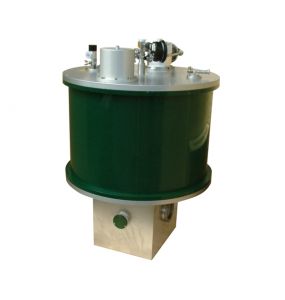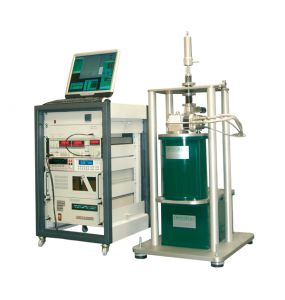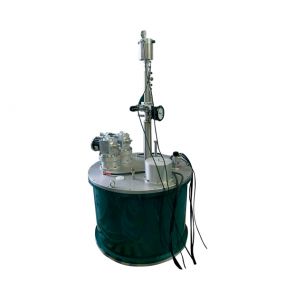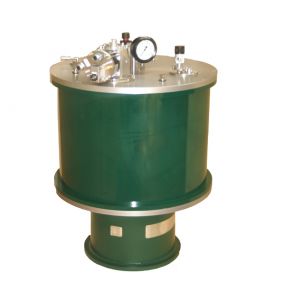



Quantum Hall System
Introduction
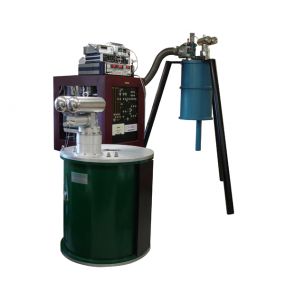
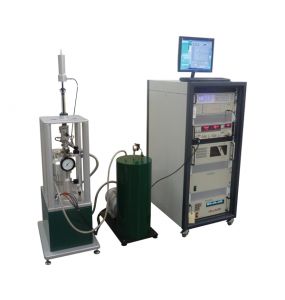
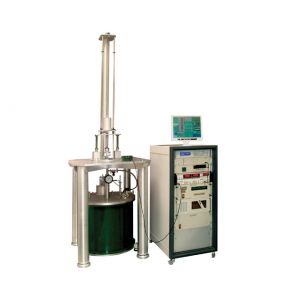
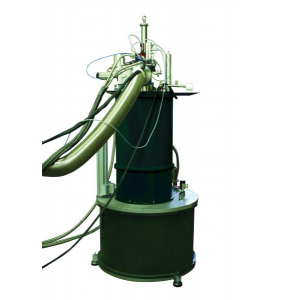
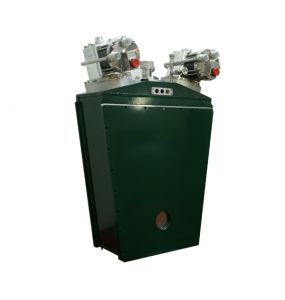
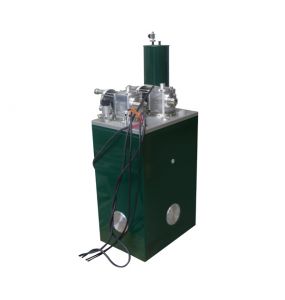
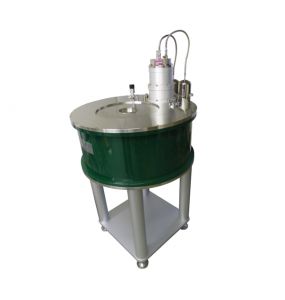
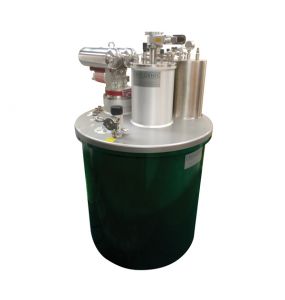
The Cryogenic QHR2000 is offered
in collaboration with the UK National Physical
Laboratory
.
The system has been developed to meet the needs of Standards Laboratories around the world for an improved level of accuracy in the calibration and maintenance of primary resistance standards. It provides the ability to resolve and measure currents and resistance values to an accuracy of 10-9.
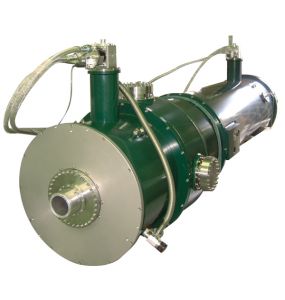
The QHR systems are configured for both Quantum Hall Metrology and research on QHE devices and other materials. Cryogenic offers several versions of the QHR2000 to suit different applications and budgets. The standard 2000 type unit has He-4 refrigeration to 1.5K for the sample. The higher resolution 2010 version features a superior Cryogenic Current Comparator (CCC), a higher field coil and a He-3 refrigerator to provide temperatures down to 0.3K. This unit is preferred for research applications, for instance, into the use of QHR for AC measurements.
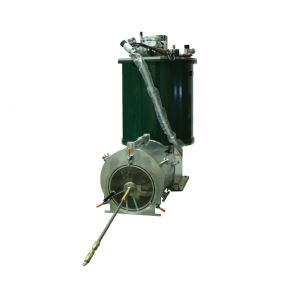
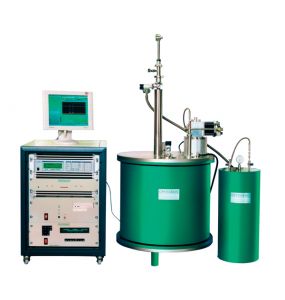
The QHR2000 consists of two major components.
1.
Quantum Hall Resistance (QHR) system
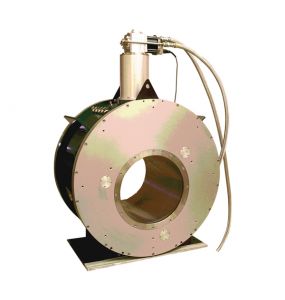
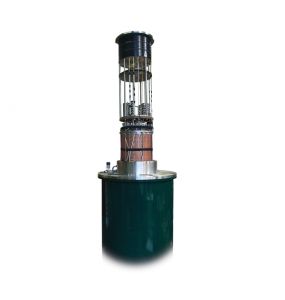
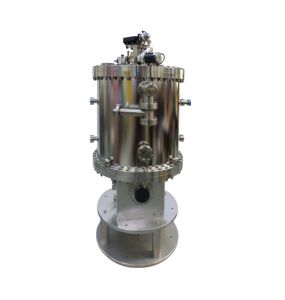
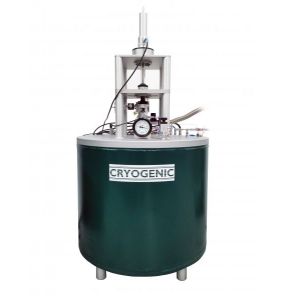
This provides an absolute value of resistance related to the von Klitzing constant of 25812.807 Ohms. To provide this reference, a Quantum Hall semiconducting device is maintained at 0.3K with a He-3 refrigerator within a high magnetic field. A superconducting magnet is used to generate a background field of up to 14 Tesla. Under these conditions the Quantum Hall plateaus of resistance are easily obtained.
2.
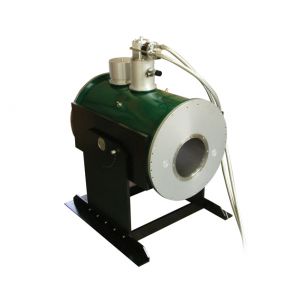
Cryogenic Current Comparator (CCC) Bridge
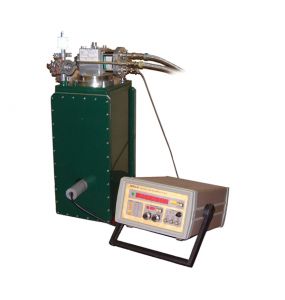
This allows two independent and isolated currents of different values to be compared and controlled with an accuracy of 10-9. The bridge circuit is balanced using a SQUID sensor as a null detector. This produces a differential voltage across the Quantum Hall device which is measured via a sensitive nanovoltmeter. The voltage generated is proportional to the difference in currents in the bridge circuit which may be directly related to the difference in the unknown and reference resistances.
Operation
The following modes of operation are provided for in the hardware and the software of the standard system:
- Measurement and characterisation of the QHE device to find the best operating points on the i=2 and i=4 plateau*, using all 6 Hall voltage taps provided on the device.
- Comparison of the 100 Ohm resistor to the Quantum Hall Resistance value at i=2 and i=4 using the CCC bridge with magnetic field applied in both positive and negative directions using different voltage taps as a cross check and with calculation of the best value and standard deviation.
- Transfer of the resistance standard of the 100 Ohm stabilised resistor to other values of resistance in the range 1 Ohm to 10 kOhm. 4) Winding ratios self check for the CCC over the full range of ratios 1 to 2065.
Options for the QHR
Automated Scanner Facility
This allows comparison of 16 or 32 resistors against the 100 Ohm standard. This enables volume calibration procedures, including those as a function of temperature. The special low thermal scanner is driven by an optical link from the main computer and is fully isolated.
Variable Temperature Facility
Interchanges with He-3 insert to provide a 1.6 to 300K working environment for research purposes. Includes VTI, sample probe, airlock and gate valve. Uses the standard temperature controller provided.
Hall Probe Field Measurement Facility
We offer the Hall probe to enable the magnet field to be measured at higher fields when transfer of CCC is not taking place. The Hall probe allows fields from 0.1 Gauss to be profiled and measured. For high accuracy, the zero offset must be referenced against mumetal reference.
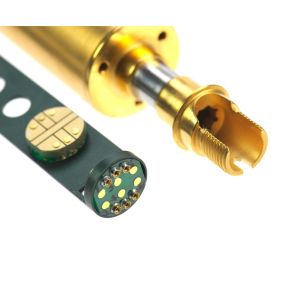
Experimental Research Probes
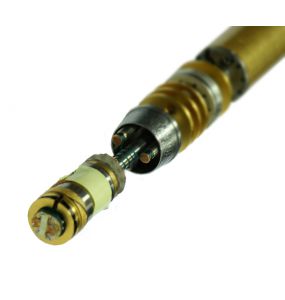
For electrical measurements on various samples.
|